
There is no useful one-size kit list: start with the procedures and room you plan to run, then ask the relevant council what it expects before ordering equipment. Separate items that must be resolved for the layout from the stock and services you will replenish; this makes missing dependencies visible before money is committed.
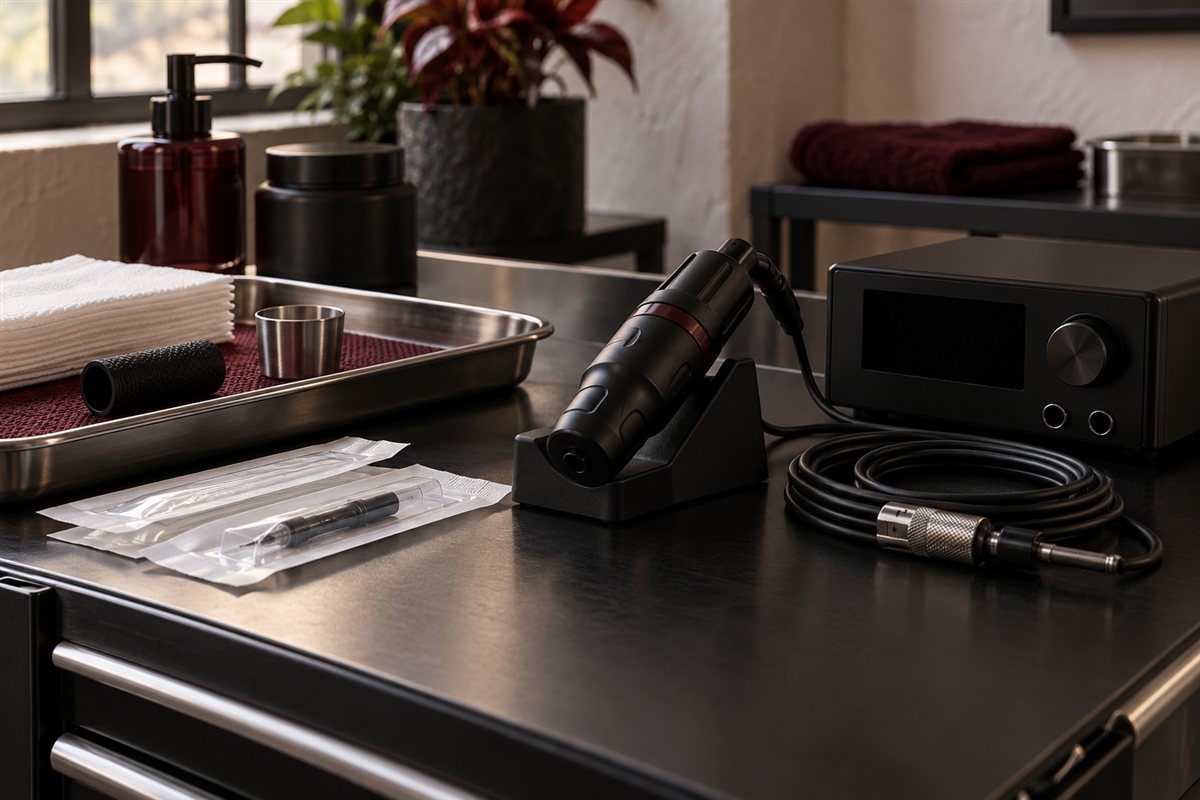
Build the list in opening order
| Stage | Add to the list | Question to settle |
|---|---|---|
| Room plan | Client furniture, artist seating, lighting, storage and power positions | Does the proposed layout work in the room, including delivery access and movement? |
| Equipment selection | Exact machine, compatible power arrangement, supported consumables and maker's manual | Has the maker confirmed each connection and required accessory? |
| Operating routine | Protective supplies, cleaning products and maintenance items that match the planned procedures | Do the council's requirements and the equipment instructions fit together? |
| Waste and records | Containers and contractor arrangements, manuals, warranty and service contacts | Who checks stock, collections and maintenance, and where are the records kept? |
These are planning prompts, not a universal bill of materials. GOV.UK describes local council registration and byelaws for England and Wales; Wales has its own newer special-procedure licensing scheme, and Scotland and Northern Ireland have separate routes. Use the licensing guide and confirm requirements with your council before fit-out.
Keep durable and recurring costs separate
Use separate columns for durable equipment, consumables, cleaning and protective supplies, maintenance, services and waste collection. Record whether a line is a one-off purchase, replenishment item or recurring service. This gives you a more useful opening budget than a single bundled-kit price.
Give each purchase an evidence line
For every item, record the exact model, manufacturer or official product page, manual, included parts, compatibility confirmation, date checked, and the person responsible for the decision. For critical compatibility details, rely on the maker's documents or written confirmation rather than a marketplace phrase such as “fits most”.
Use the guides to fill specific gaps
Start with the machine guide and power supply guide for a matched setup. Use the chair guide to plan client positions and the lighting guide to place the task light. For infection prevention in England, UKHSA points to the tattooing and body-piercing toolkit; HSE SR12 covers COSHH controls for hazardous substances. Neither replaces your council's current conditions or training.
Browse equipment categories
Affiliate disclosure: As an Amazon Associate, we earn from qualifying purchases. These are category searches, not product recommendations. Compare the exact maker’s instructions and your council’s requirements before buying.
Sources & further reading
Sources checked .